
Inmate roll call is one of the most critical routines in any correctional facility; however, in most facilities, it’s still done manually. This method has clear limitations due to its reliance on human factors and its lack of digital traceability, which can lead to serious consequences for public safety. Biometrics addresses this problem by automating these processes and generating a verifiable, auditable record for greater control and security.
Traditional Operating Method
Inmates must be counted to verify the number of prisoners and their conditions, as well as to comply with legal requirements for internal security and control of the facility.
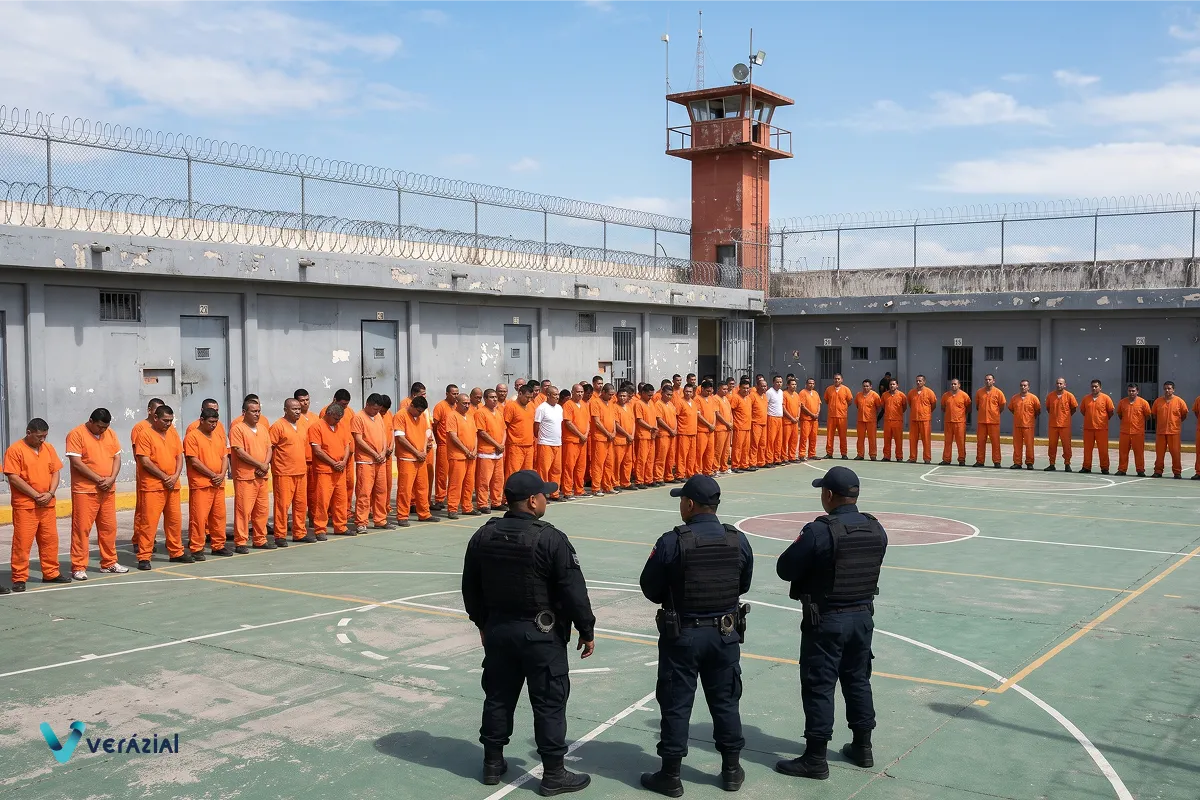
There are two types of counts: ordinary counts, conducted daily at fixed times or during security staff shift changes, and extraordinary counts, ordered by the facility’s Chief of Services. In both cases, the results must be recorded in a written report prepared by the officers conducting the count. In practice, this means that an officer walks through the cells and modules several times a day, visually identifying each inmate and checking them against a paper list or a spreadsheet.
This process is highly inefficient, consuming a great deal of time and human resources. It also leaves critical challenges in prison management unresolved, such as reliably tracking each inmate or supervising prisoners, visitors, staff, and contractors within a single, auditable record. The result is a security system with clear shortcomings.
To learn more about the limitations of manual inmate counting, we invite you to read our article More than just Inmate control: How Biometrics reinforce total Prison Security.
Risks of Manual Inmate Counting
Beyond its operational weaknesses, this model also carries structural risks that can lead to serious and irreversible consequences.
- Dependence on the human factor: fatigue, shift rotation, or pressure to speed up the process increase the likelihood of counting errors.
- Unreliable identification methods: visual recognition or verbal confirmation of personal data doesn’t guarantee that a person really is who they claim to be.
- Absence of digital traceability: a paper-based count doesn’t generate an auditable, verifiable record, making facility management and supervision more difficult.
- Slow response time: detecting a discrepancy and resolving it can take hours, during which the facility operates on outdated information.
- Limited scalability: in facilities with a large number of inmates, the margin of error grows in proportion to the number of people to be verified.
Documented Failure Modes
These limitations translate into concrete, recurring failure modes, causing:
- Escapes, when counts detect absences too late to trigger the corresponding search protocol. A system that detects absences in real time can prevent them.
- Identity impersonation, taking advantage of physical similarities or a lack of rigorous verification to pass as another inmate during the roll call.
- “Ghost” inmates, meaning discrepancies between the number of records and the people physically present. This can happen because some inmates appear on official lists but aren’t physically in the facility, whether due to outdated transfer records or fraud intended to justify nonexistent budget line items; or because there are inmates in the facility who aren’t documented in the system due to administrative errors or improperly recorded admissions. In both cases, the facility lacks full control over who is actually inside.
International organizations, such as the World Health Organization (WHO), emphasize the need for reliable information systems and records in correctional facilities to ensure the health and integrity of all incarcerated individuals. This requirement is directly linked to Target 16.6 of the Sustainable Development Goals of the United Nations, which recognizes the importance of creating effective, accountable, and transparent institutions at all levels. Traditional correctional facilities cannot meet these requirements because they are unable to demonstrate in real time and in a verifiable manner who is where and at what time.
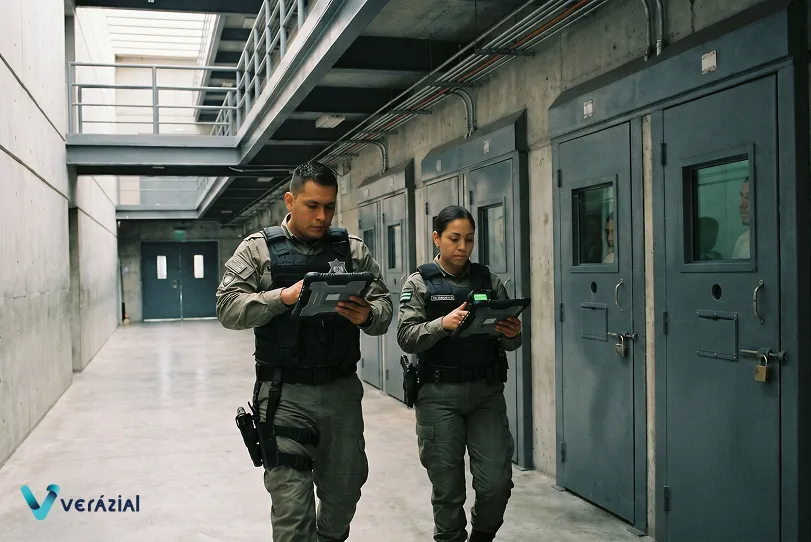
Roll Call with Biometrics
Biometric identification eliminates the risks of manual counting. By relying on unique and non-transferable physical features, it prevents identity impersonation and automates the counting process, reducing it to a matter of seconds. In addition, it generates immediate alerts whenever there is a discrepancy and maintains a complete digital record of every verification and every person entering and leaving the facility, available at all times for external audits and internal investigations. This turns escapes and “ghost” inmates into preventable failures, not inevitable risks of the system.
This identification can be carried out using fingerprint, facial recognition, or iris technologies. As explained in our article Multimodal Biometrics, combining several modalities strengthens system reliability in high-demand environments like prisons, where capture conditions may vary, but security cannot be compromised.
Simply put, biometrics is a direct response to the documented failures of the manual system. Replacing manual counting with an auditable biometric record is a decision driven by institutional responsibility.
Discover Verázial ID, a secure solution specially designed for correctional facilities that centralizes the identification of inmates, staff, and visitors on a single, reliable, and auditable platform.
Contact us for a demo and/or personalized assessment.
References
- Images © Verázial Labs. All visuals are proprietary AI-generated assets created exclusively for this publication.