
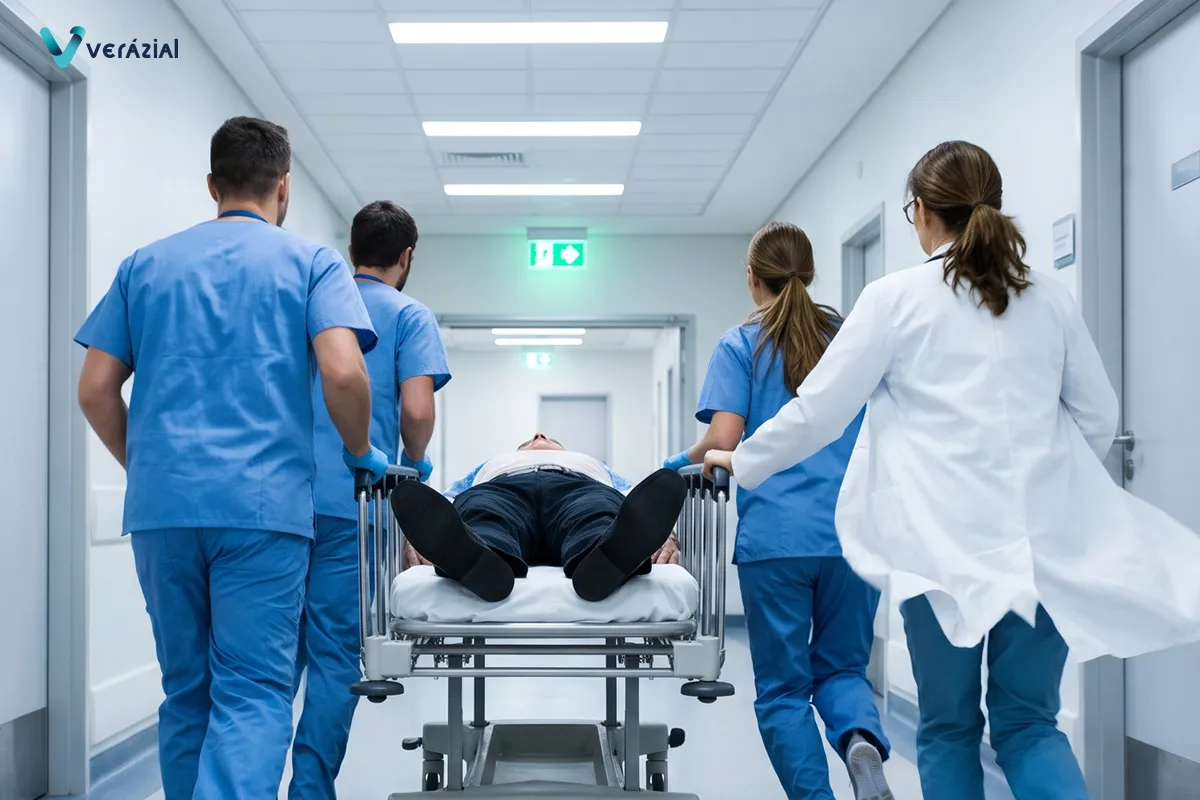
In the emergency room, every minute counts. A mistake made during a patient’s admission carries over throughout the entire care process, with consequences that can be fatal. Biometrics automatically links the patient to their medical record, ensuring that the treatment administered is the correct one.
According to the WHO, four out of ten people are harmed in some form in primary and ambulatory settings, and up to 80% of that harm could have been prevented. Patient identification is central to this figure. A report from the Joint Commission notes that 13% of serious incidents are related to identification errors.
Unlike other areas of the hospital, the emergency department’s conditions favor fast and sometimes poorly grounded decisions, due to constant patient pressure and work overload. On top of this comes the unreliability of traditional identification systems, as we pointed out in our article Patient Identification Wristbands: Are they enough to ensure Patient Safety?, a vulnerability that becomes even riskier with the arrival of elderly patients with cognitive impairment, unaccompanied minors, or victims without identification documents.
The Risks of Triage
Triage relies mainly on the patient’s own verbal responses, who is asked for their name, age, condition, and allergies. Staff assume this information is accurate if it matches their ID document, but certain scenarios question the reliability of this method:
- Victims who arrive without documentation, whose real identity cannot be confirmed at the moment, forcing staff to rely on provisional identifiers such as “patient 1” or “patient 2.”
- Unconscious patients, who cannot confirm or correct their identity verbally.
- Unaccompanied minors or people with cognitive impairment, who can’t reliably provide a response, as we discuss in our article Secure Identification for Dementia Patients in Hospitals.
- People with a language barrier, whose responses can lead to misinterpretation or confusion.
- Changes of department, which open a new opportunity for the arriving patient’s identity to be mixed up.
The consequences are far from trivial. A registration error can lead to contaminated medical records, overlapping files, or mistaken identities, which later translate into incorrect diagnoses and treatments.
The Risks of Trauma
When a patient arrives in critical condition, every minute of delay in treating the injured worsens the prognosis, so the entire team’s effort focuses on stabilizing them as quickly as possible. It’s precisely this urgency that causes their identification to fade into the background, allowing several risk scenarios to happen:
- Blood transfusions, where administering a unit to the wrong person or with an incompatible blood type can trigger a severe or even fatal reaction, as we explain in our article Why Biometric Identification is becoming critical for end-to-end Blood Traceability.
- Medication administration during the intervention, with no time to confirm allergies if the patient’s identity isn’t verified, carrying the risk of a serious adverse reaction.
- Removal of clothing and personal items during stabilization, which sometimes includes the injured person’s identification wristband, leaving them without a physical identifier.
- Collection of multiple samples under time pressure, one of the moments with the highest risk of mislabeling in the entire care process, which can result in test results being attributed to the wrong person.
Here too, the consequences are far from minor. These errors can cause serious and immediate harm to the patient, and even cost them their life.
How Biometrics Responds
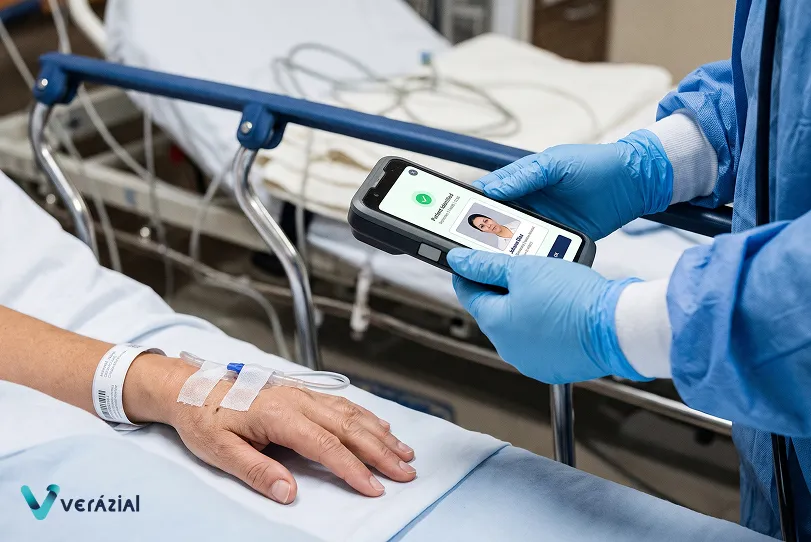
Biometrics in the emergency department combines the speed of action with the required precision of the information, thanks to facial recognition, fingerprint, and iris technologies. It doesn’t require the patient’s active cooperation, so even if they’re unable to identify themselves, whether because they aren’t carrying an ID document or due to their medical condition, their identity can still be confirmed. This method also makes it possible to link them to their medical record within seconds, preventing duplicate records when the same patient is readmitted across different episodes. In addition it helps to speed up triage by reducing time spent on administrative tasks and easing the workload on healthcare staff.
For emergency departments, adopting this technology represents a direct investment in patient safety, as well as in staff convenience and facility efficiency. In an environment where every second counts, biometrics ensures identity errors don’t compromise a patient’s prognosis.
Discover how Verázial ID helps your emergency department identify patients quickly and securely.
Contact us for a demo and/or personalized assessment.