


Correct patient identification is the first line of defense against safety errors in any hospital. But what happens when a patient isn’t able to take part in any verification process at all? Biometric identification of dementia patients is key to closing this gap and ensuring these patients get the right care, every time.
Dementia is a condition that progressively affects memory, cognitive function, and a person’s ability to carry out everyday tasks independently. According to a study published in The Lancet Public Health, the number of people living with dementia worldwide is projected to grow from 57.4 million in 2019 to roughly 153 million by 2050. That growth has a direct impact on hospital systems, as more and more patients are arriving in emergency departments, undergoing surgery, or receiving long-term treatment without being able to reliably confirm who they are, what medication they’re on, or what allergies they have. This information gap significantly widens the margin for patient identification errors.
The risks of misidentifying a patient with Dementia
According to the Joint Commission, patient identification errors account for 12.3% of serious adverse events reported in hospital settings. That risk multiplies when a patient, because of their condition, can’t reliably serve as their own means of authentication.
Several factors drive this risk higher:
- They may not be able to confirm their identity verbally in a reliable way, since they may forget their own name or give an incorrect one.
- Family members or caregivers may not be present during critical moments, such as emergency admission, medication administration, or sample collection.
- They may remove or tamper with their ID wristband, particularly during episodes of agitation or aggression, which are common with these conditions.
- Shift changes and transfers between wards increase the odds that staff won’t personally recognize the patient and will have to rely solely on physical identifiers, like wristbands, which can be inaccurate or damaged.
For a deeper look at the limits of identification systems built around physical supports, read our article on Patient Identification Wristbands: Are they enough to ensure Patient Safety?
The Clinical, Economic, and Human cost of Identification errors
Dementia is recognized as a global public health priority. It’s the seventh leading cause of death worldwide and one of the leading causes of disability and dependency among older adults.
The WHO estimates the annual cost of dementia at more than 1% of global GDP, and in 2019 alone, $1.3 trillion went toward healthcare, social care, extended hospital stays, and repeat treatments tied to diagnostic and identification errors, costs that a secure identification system could have prevented.
But beyond the financial toll, there’s an ethical responsibility at stake: protecting the most vulnerable patients. Dementia patients are among the least able to advocate for their own rights within the healthcare system, which makes them entirely dependent on hospital processes working as they should.
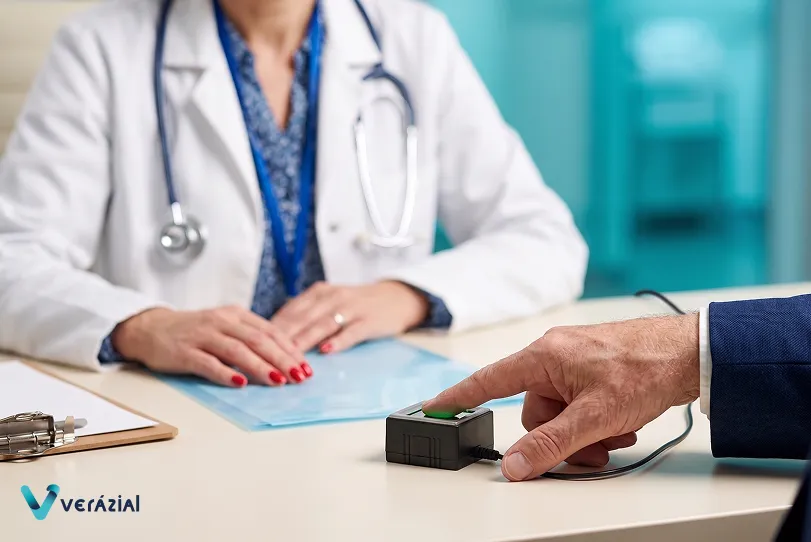
How Biometrics protects Dementia patients
The biggest advantage of biometric identification is that it doesn’t require the patient’s active participation or understanding. The system identifies the individual based on a physical trait that’s uniquely theirs, with no need for conscious cooperation, as long as, of course, prior consent was given to enroll their biometric data. When a patient’s condition prevents them from giving that consent themselves, the authorization falls to family members or a legal representative.
This matters most in moments like:
- Emergency admission without documentation or a companion. Biometrics confirm the patient’s identity so staff can pull up their medical history and other critical information, supporting better clinical decisions.
- Medication administration. Biometric authentication removes the risk of a patient receiving a dose meant for someone else, preventing adverse reactions and avoidable harm.
- Diagnostic and surgical procedures. Biometric checkpoints along the care pathway ensure samples and test results are correctly matched to the right patient.
You can read more on this in our article covering the Critical Patient Identification Points in Hospitals: The Value of Biometrics.
In a sector where mistakes can have irreversible consequences, secure patient identification isn’t optional, it’s a fundamental requirement. Making sure every patient gets the right treatment at the right time is essential to reducing avoidable risk and improving clinical outcomes. That responsibility only grows for patients with cognitive impairment, who depend entirely on the healthcare system’s ability to recognize them accurately and deliver safe, personalized care.
Find out how Verázial ID can help your organization eliminate patient identification errors.
Contact us for a demo and/or personalized assessment.
References
- Close-up of a patient ID wristband. [Freepik]