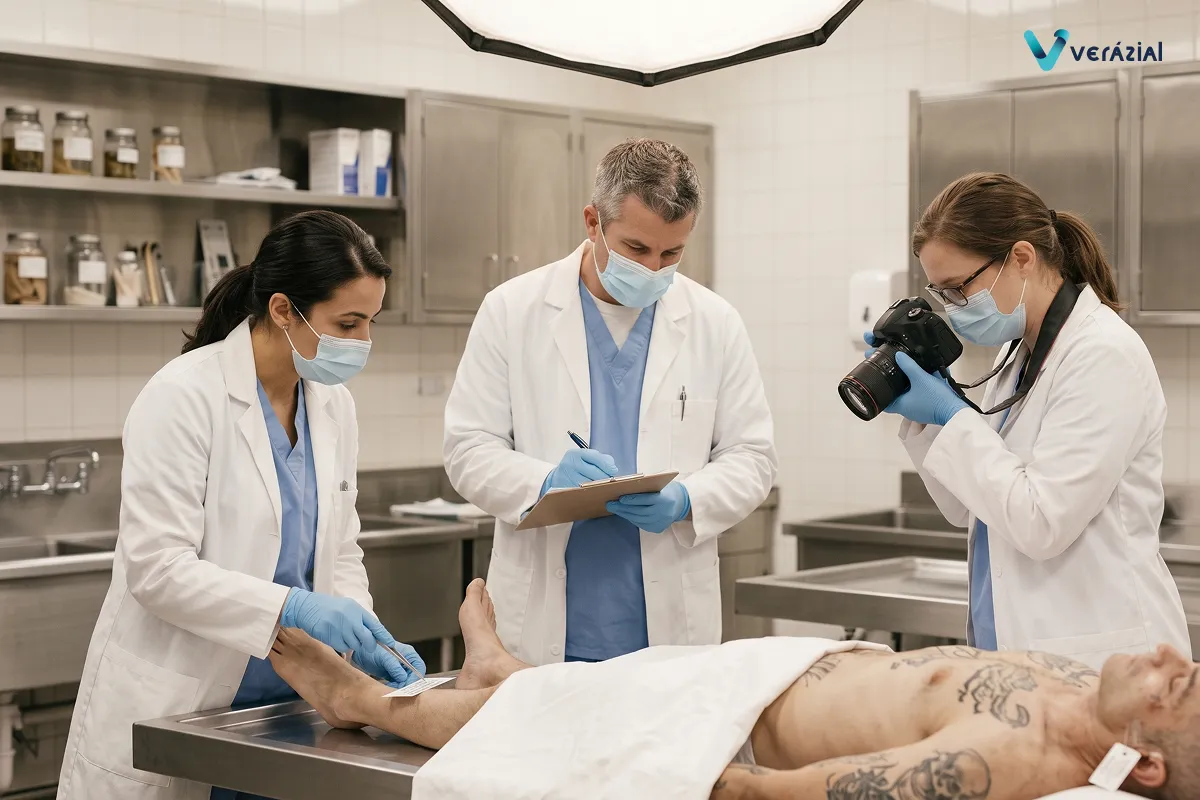

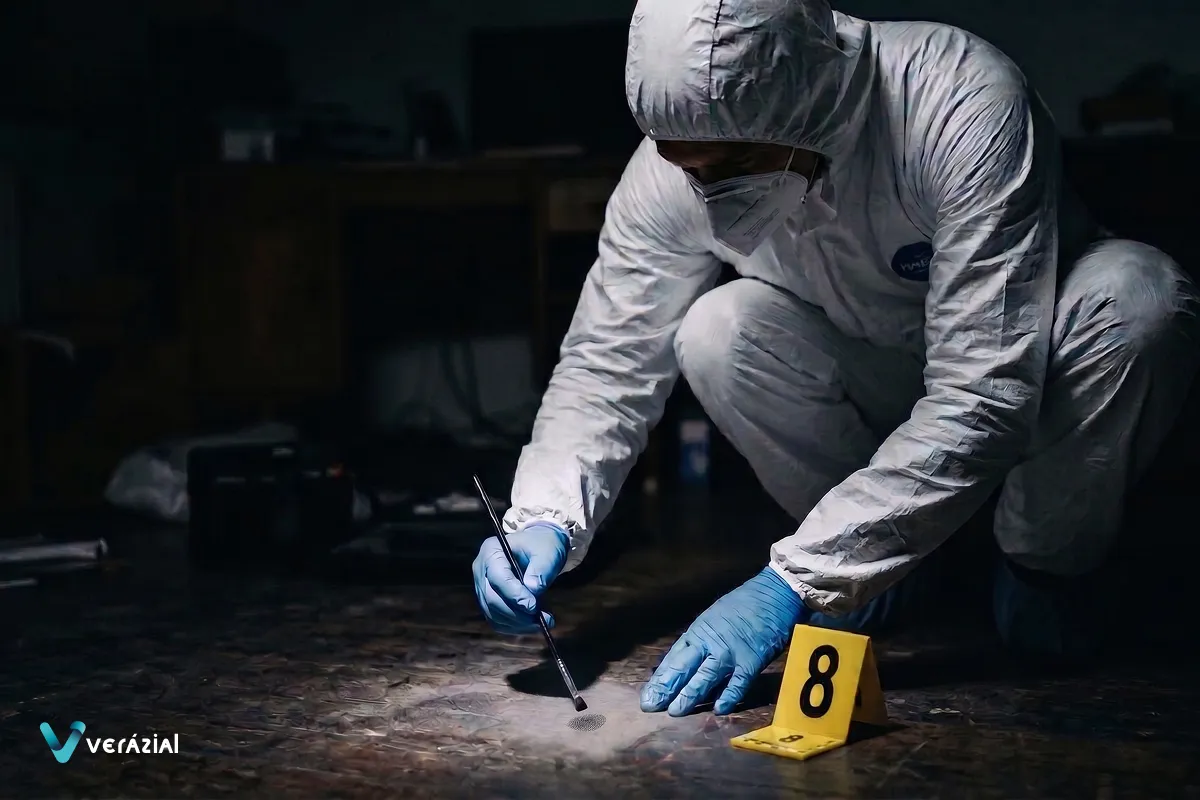
Behind every fingerprint identification in a criminal investigation, there are two very different moments: the collection of the fingerprint and its matching. Understanding the entire process, from digitizing the sample and entering it into the AFIS/ABIS system to comparing it with the biometric template database, is essential for anyone in charge of a forensic laboratory or investigative unit. This process is crucial not only for identifying suspects but also for ensuring that the evidence is considered valid in a judicial proceeding.
Two Prints, Two Technical Realities
A latent print is a print found at a crime scene and left involuntarily. It is caused by skin contact with an object, leaving behind a trace of sweat, grease, or other substances. Since it’s not visible at first glance, collecting it requires specific methods such as powders, cyanoacrylate fuming or forensic lights.
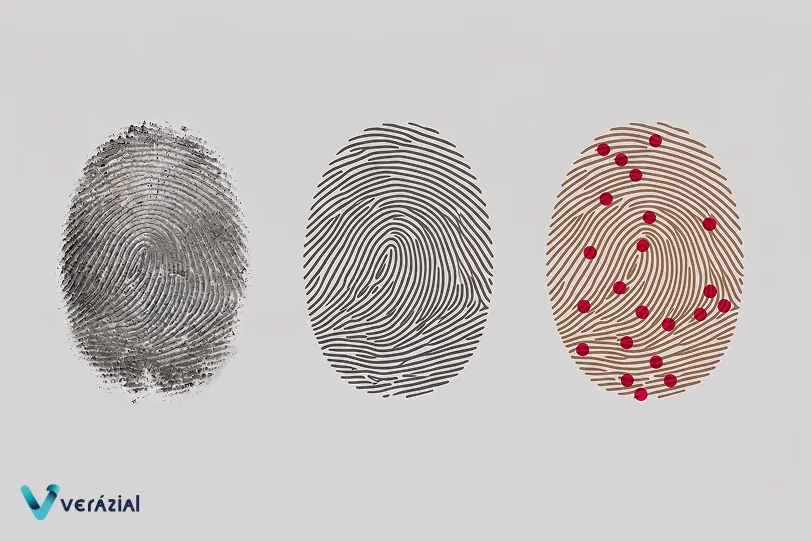
Sample quality depends on factors like surface type, elapsed time, or environmental conditions, so the usual result is a partial image with a highly variable number of minutiae. According to NIST’s NISTIR 7859 report, the correct identification rate for latent fingerprint searches against a database of 100,000 subjects did not exceed 71,4%, even under the most favorable conditions, whereas this percentage dropped considerably in cases involving low-quality prints.
Meanwhile, live capture is a standardized process performed under controlled conditions using a biometric sensor, with a minimum resolution of 500 ppi according to the ANSI/NIST standard. However, the forensic community is already pointing to 1,000 ppi as the new benchmark. The resulting image is complete and allows for the extraction of the full minutiae profile. After the capture, the system generates a biometric template that is stored in the ABIS database along with its associated metadata.
Behind most of these processes are AFIS and ABIS systems, the platforms used for large-scale biometric matching, capture, and storage. In both systems, the latent print enters as a query, while the live capture forms part of the gallery it’s compared against. To understand the differences between the two, we invite you to read our article AFIS vs. ABIS: What is the difference and Why it matters.
The Investigation Workflow
In an investigation involving a latent fingerprint, the print is digitized and entered into the AFIS system as a query, then compared against the biometric templates of the database originating from live captures, whether from prison records, police records, or other controls. Modern matching engines incorporate differentiated algorithms for both sample types: they assess the quality of the input image, adjust similarity thresholds according to the sample type, and return a list of candidates whose samples are objectively similar, for the forensic expert to review and include in the court file if desired. This allows them to focus on contextual interpretation of the case rather than visual comparison.
In the case of ABIS systems, these allow matching not only latent fingerprints but any type of latent evidence, such as a partial image of a suspect’s face captured by a low-quality security camera. Combining several biometric technologies increases the positive identification rate in cases that would otherwise remain unsolved, and it fosters interoperability and international collaboration thanks to the NIST standard. As described in What is the NIST Standard and Why does it matter in Biometrics?, this framework is a fundamental condition for cross-border investigations.
Biometrics as Evidence
Advanced biometric systems designed for forensic environments serve as a barrier against human error, guaranteeing greater precision and full traceability of every action, from sample collection and digitization to the assessment of similarities between system templates and the forensic expert’s review.
Therefore, biometrics helps prevent serious judicial errors and reduce the number of unsolved cases, while lending credibility to the investigation before the judicial system through auditable logs and strong and verifiable arguments. All of this also significantly streamlines procedures and optimizes resources.
Current biometric software is designed to assist the forensic expert in evidence collection and analysis. Its goal is not to eliminate human judgment, but to eliminate the subjectivity of manual analysis.
Discover how Verázial ID integrantes live capture and latent print matching into the same solution, with the traceability required by every judicial proceeding..
Contact us for a demo and/or personalized assessment.
References
- Images © Verázial Labs. All visuals are proprietary AI-generated assets created exclusively for this publication.