

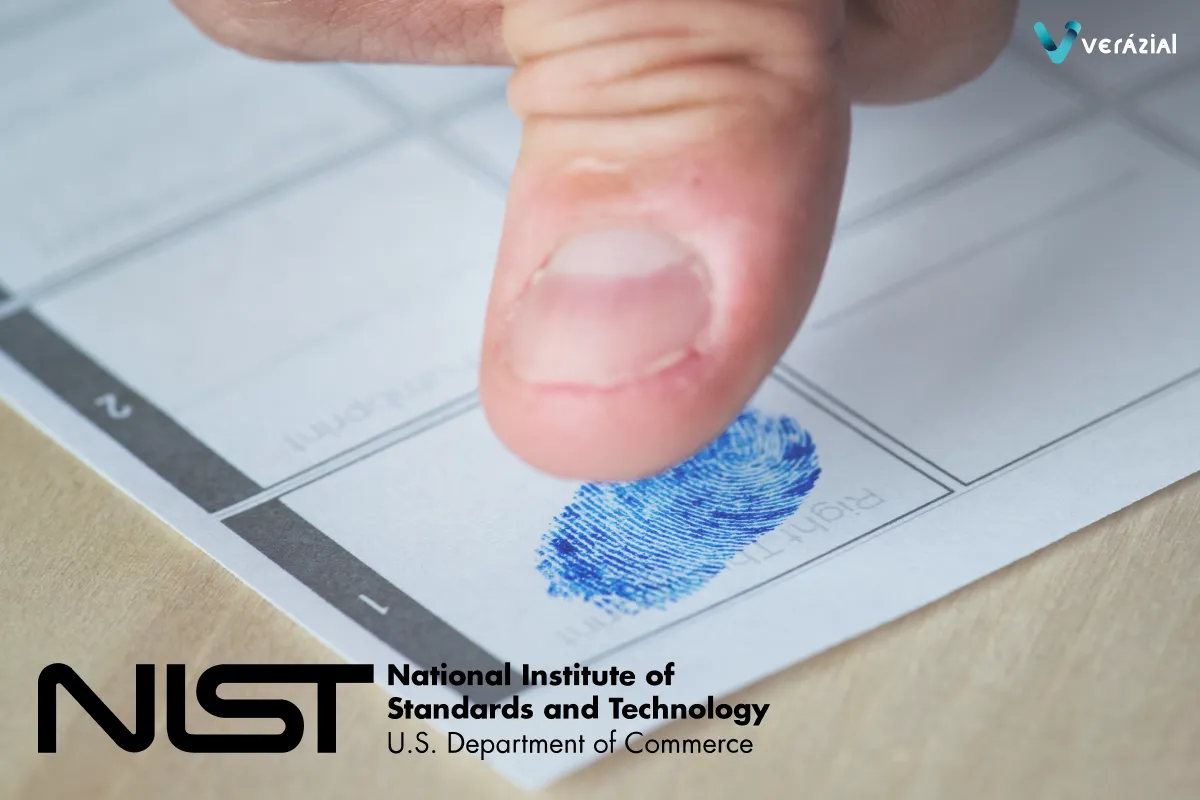
Biometric identification has transformed how organizations manage security and information access. Fingerprints, iris patterns, facial patterns have become unique credentials that cannot be forgotten, lost, or easily forged. However, an identification system loses its value if its data remains trapped in a silo, unable to be read, verified, or integrated by other platforms.
This is where NIST standards come into play. They define the “common language” that allows different biometric systems to exchange identity data accurately and consistently, removing the technical barriers that hinder communication and cooperation across the global security ecosystem. As highlighted by NIST, the effectiveness of biometric solutions is directly linked to the implementation of rigorous standards that enable full interoperability across diverse platforms.
But what is NIST?
The National Institute of Standards and Technology is a U.S. Department of Commerce federal agency specializing in the development and promotion of technological standards. Its standards are widely implemented by organizations such as the FBI, the U.S. Department of Homeland Security, and the CIA.
In the biometric sector, NIST has spent decades evaluating biometric technologies and defining data exchange formats that have become internationally recognized standards. These formats have been adopted globally by organizations such as Interpol and the International Civil Aviation Organization (ICAO). As a result, when a biometric system complies with NIST standards, it demonstrates its ability to communicate seamlessly with any other system within the global identification ecosystem.
The Practical Importance of NIST Standards
In sectors where biometric identification has legal, regulatory, or public security implications, a lack of interoperability goes beyond mere technical integration challenges. It becomes a critical vulnerability that can trigger serious failures, with direct consequences for both citizens and the integrity of the institutions themselves.
Understanding the relevance of NIST standards is therefore the starting point for any organization making decisions about biometric identification, as compliance guarantees security, traceability, and seamless data exchange across operational environments such as:
- In Forensics and Criminal Investigations:
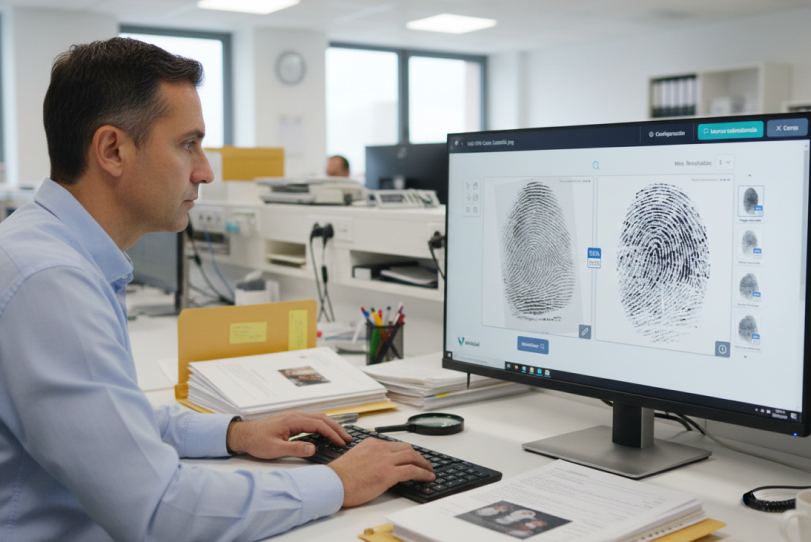
Biometrics covers the entire cycle of forensic investigation, from the collection of latent fingerprints at a crime scene to disaster victim identification, suspect verification, laboratory evidence matching, and the management of missing persons databases.
Behind many of these processes are AFIS and ABIS system, large-scale biometric platforms designed for the capture, storage, and matching of biometric data. To understand the differences between them, we invite you to read our article, AFIS vs ABIS: What is the difference and Why it matters.
Across all these scenarios, biometric data must circulate freely among forensic laboratories, police departments, law enforcement, immigration authorities, and international bodies. NIST-compliant formats facilitate inter-institutional and international collaboration, allowing for integrated research and joint investigations.
- In Correctional Facilities:
In prison environments, biometrics plays a fundamental role in monitoring who enters and exits the facility, who receives visitors, who is transferred between institutions, and who has specific access permissions. To delve deeper into how these technologies are implemented in day-to-day prison operations, we invite you to read our article More than just Inmate control: How Biometrics reinforce total Prison Security.
These processes generate data that must be compatible with external databases and systems. Whether courts issuing legal decisions, law enforcement agencies conducting investigations, rehabilitation services monitoring individuals, or facilities receiving transferred inmates, biometric records and identity data must be readable, processable, and interpretable across different platforms. Using NIST-compliant data is what makes this communication possible, preventing identification errors that could lead to irreversible legal, human, and institutional consequences.
- In Security and Critical Infrastructure:
In critical infrastructure and security environments, such as airports, border control checkpoints, and transportation hubs, biometric systems must process large volumes of individuals while connecting in real time with systems operated by different countries and agencies. Biometric data captured at check-in must be instantly checked against international watchlists, just as border identification must function regardless of the system installed in the neighboring country. A failure in interoperability would create a security breach, which NIST standards prevent by ensuring these systems can communicate reliably and securely.
NIST as a Foundation for Security and Interoperability
NIST standards are not merely technical specifications, they are the strategic pillar that allows biometrics to move beyond isolated systems and become a globally integrated security tool. By adopting NIST formats, organizations ensure total interoperability, breaking down barriers between forensic platforms, correctional systems, and security networks in critical infrastructure.
This standardization is the only way to ensure data continuity in environments where precision is vital from forensic evidence matching to identity management in prisons and border crossings. By eliminating information silos, NIST enables inter-institutional collaboration, both locally and internationally, and drastically mitigates security risks derived from communication errors.
Ultimately, committing to NIST is not an option, it is a non-negotiable condition for any system that demands reliability, traceability, and an immediate response capability. A serious biometric system must not only be precise in its capture but also universally communicable.
Discover how Verázial ID implements NIST standards in its biometric architecture, guaranteeing maximum interoperability with reference institutional systems.
Contact us for a demonstration and/or a personalized assessment.
References
- Close-up of a fingerprint on paper. [Freepik]
- Image © Verázial Labs.