
Identity fraud in healthcare is far more widespread and difficult to detect than it may initially appear. What often begins as a seemingly harmless act, someone using another person’s health insurance card, can ultimately lead to serious clinical consequences for the impersonated patient. As healthcare systems continue to digitalize, biometric identification is emerging as the most reliable solution to close this critical security gap.
Within healthcare, accurate patient identification is the foundation upon which the entire continuum of care depends. Every diagnosis, treatment, and prescribed medication is personalized and linked to a specific individual. When this process fails because someone exploits weaknesses in the system to benefit from healthcare services they are not entitled to, the consequences go far beyond an administrative irregularity. Another person’s medical records become contaminated with clinical information that does not belong to them, and the moment that altered record is consulted to make critical medical decisions, the legitimate patient may face severe consequences.
According to the World Health Organization (WHO) , diagnostic errors account for approximately 16% of preventable harm in healthcare every year, and a significant proportion of these incidents are linked to patient identification failures. Identity fraud introduces an additional layer of risk that traditional healthcare identification systems are not designed to detect.
For years, patient identification has relied on conventional methods such as manual checks or the use of wristbands, solutions that have repeatedly proven to be unreliable over time. To prevent the downstream risks associated with misidentification, biometrics is increasingly recognized as a trusted approach for ensuring accurate patient identification at critical points of care. You can learn more about this in our article Critical Patient Identification Points in Hospitals: The Value of Biometrics.
From Administrative fraud to Clinical harm
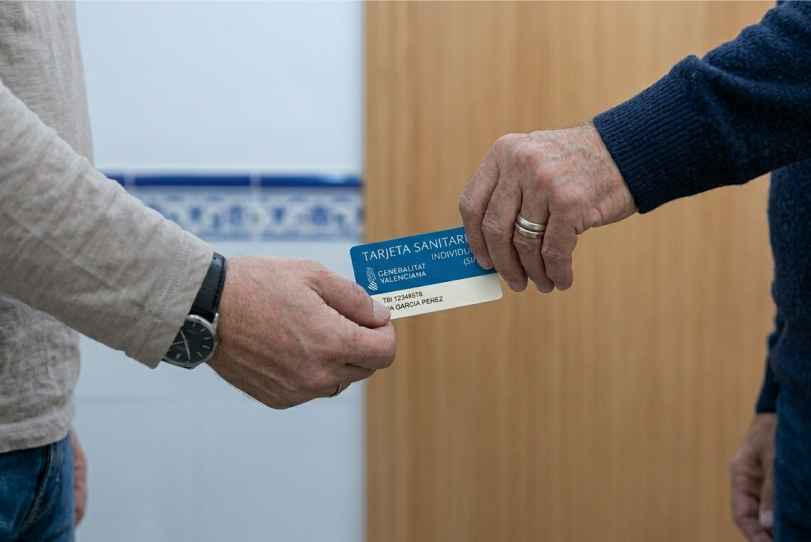
The most common form of identity fraud in the healthcare system often appears harmless at first glance. A person lends their healthcare card to a family member, partner, or friend so they can access medical consultations, diagnostic tests, or subsidized medication, often with good intentions and without fully understanding the implications and consequences involved.
While this constitutes an administrative offense with potential legal consequences, the real damage does not lie in the penalty itself. The true risk lies in what happens to the legitimate cardholder’s medical record.
- The Risk Chain
When an individual accesses a healthcare facility using someone else’s identity, every piece of information generated during that visit, including diagnoses, prescribed medications, and test results, is automatically recorded under the legitimate patient’s medical history. Once contaminated in this way, the medical record becomes a significant source of error when healthcare professionals later rely on it to make clinical decisions.
Given the scale of preventable harm associated with diagnostic and medication errors in healthcare, the WHO has established Medication Without Harm as the theme for the third Global Patient Safety Challenge.
- The Economic Impact
Identity fraud creates a substantial direct economic burden on the healthcare systems through fraudulently obtained benefits or services, improperly dispensed subsidized medications, and the use of diagnostic resources under someone else’s identity. Globally, the annual cost associated with these errors is estimated at approximately $42 billion, nearly 1% of global healthcare spending.
- The Human Consequences
Beyond the financial costs, these diagnostic and identification errors can lead to severe patient harm, prolonged illness, or even preventable deaths. These irreversible consequences affect not only the health of the impersonated patient but also that of the impersonator.
According to the WHO, medication errors alone cause at least one death every day and harm approximately 1.3 million people annually in the United States.
Why current Verification Systems are no longer enough
Healthcare cards were designed as access credentials to the healthcare system, not as an identity verification mechanism. Presenting the card does not guarantee that the individual requesting care is truly the rightful owner. Visual checks by administrative staff, such as comparing an ID photo to the person presenting it, are inherently unreliable and difficult to apply consistently in high-pressure healthcare environments.
Once inside the hospital, identification wristbands are the most widespread method for linking patients to their medical records. However, they present multiple limitations as they are highly susceptible to human error. Wristbands may be incorrectly applied, exchanged between patients, or become damaged over time. Furthermore, they do not prevent identity fraud, as the person wearing the wristband may be carrying information that does not belong to them. In our article Patient Identification Wristbands: Are they enough to ensure Patient Safety?, we examine these limitations in greater detail.
Overall, current verification methods remain excessively vulnerable and leave significant room for error, making identity fraud a persistent and difficult-to-detect challenge in modern healthcare systems.
Biometrics as a secure response
Ensuring the right diagnosis for the right patient is the cornerstone of safe and effective healthcare. In this context, biometrics plays a critical role in reducing the risks and consequences associated with diagnostic and identification errors.
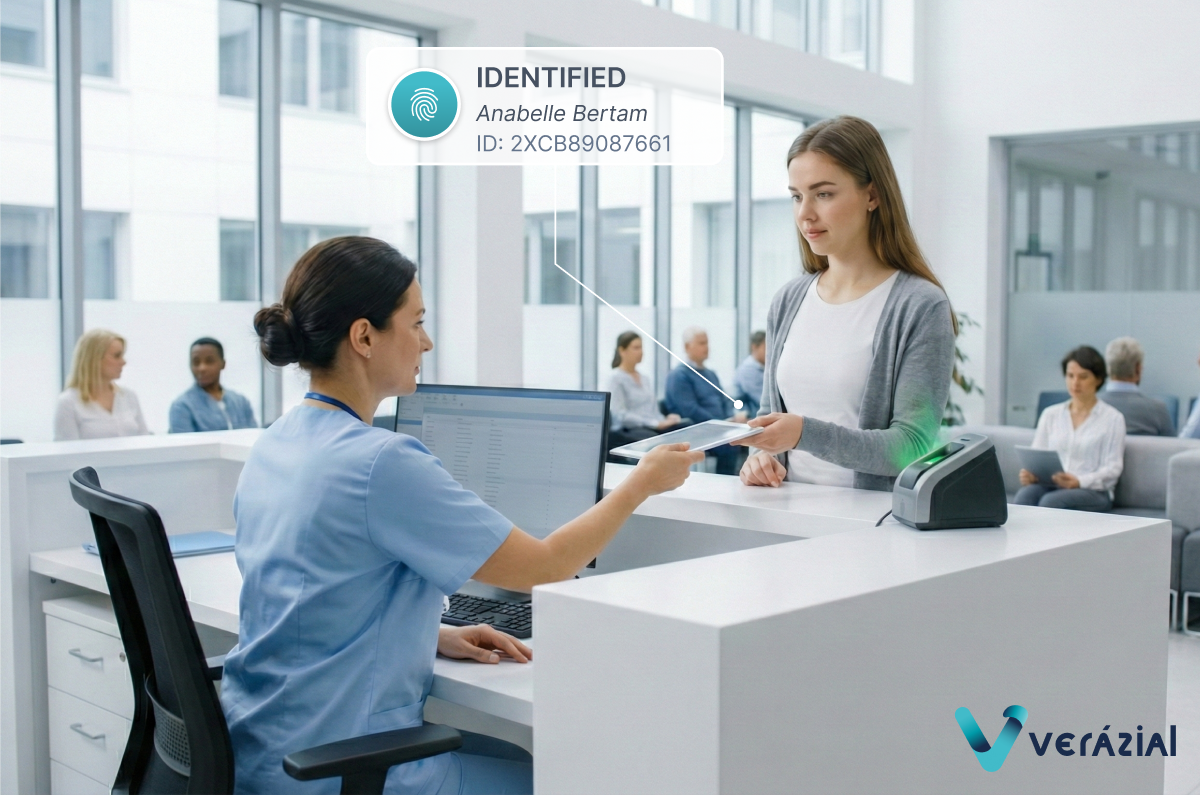
A process that takes just a few seconds, such as capturing a non-transferable biometric sample, whether facial, fingerprint, or iris, eliminates the possibility of impersonation and contamination of a patient’s medical record. This delivers a level of accuracy far beyond what traditional identification methods can achieve.
For this reason, biometrics is no longer simply a recommended improvement, it is becoming an essential foundation for any healthcare system aiming to deliver truly secure patient care.
Find out how Verázial ID can help your organization guarantee accurate patient identification.
Contact us for a demonstration and/or personalized assessment.
References
- Images © Verázial Labs. All visuals are proprietary AI-generated assets created exclusively for this publication.